A custom website design isn’t just a trend in 2025; it’s essential for businesses. It helps them stand out and connect with their audience.
As users expect more and competition rises, your website must go beyond basic templates and standard layouts.
A well-crafted website boosts credibility, improves user experience, and increases conversions. Whether you’re starting fresh or updating, these elements are key to staying ahead.
Let’s explore the top five must-have features every custom website design needs in 2025 to stand out, engage users, and drive results.
1. Hyper-Personalised User Experience
The days of static websites are over. In 2025, effective websites will be personalized and lively. They will adapt content, layout, and recommendations to fit user behavior, location, or browsing history.
What to Implement:
- Smart content that varies depending on the user’s interests or previous activities
- Personalized product or article recommendations.
- Dynamic call-to-actions (CTAs) that respond to user preferences
Personalization boosts engagement, trust, and conversions. When users feel that a website “understands” them, they are more likely to stay and take action.
2. Mobile-First & Thumb-Friendly Design
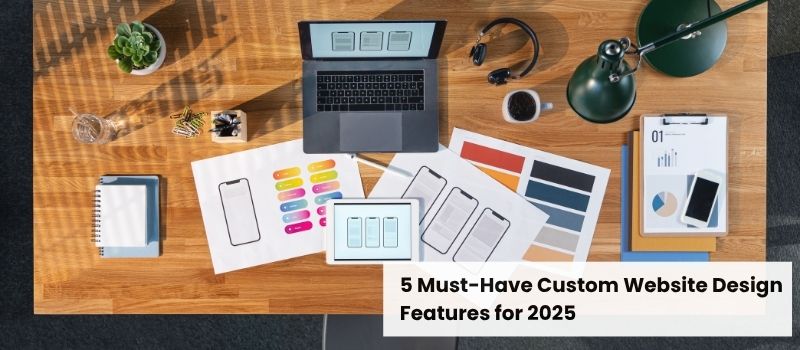
Mobile devices make up over 70% of web traffic. So, a mobile-responsive site isn’t enough; it needs to be mobile-first. This means starting with the smallest screen and making sure all elements work well on touchscreens.
Must-have features:
- The buttons and menu items are large and easy to tap.
- Simple, scrollable content layouts
- Fast load speeds on mobile networks.
- Minimum pop-ups or invasive interstitials
Google prioritizes mobile friendliness in its rankings, and users demand quick, hassle-free browsing. A mobile-first design ensures your brand offers the best experience on the devices users rely on most.
3. Accessibility & Inclusive Design
Inclusivity is not an option; it is necessary. By 2025, more businesses will need to create websites that everyone can access, including those with disabilities.
Key Features to Include:
- Keyboard navigation and screen reader compatibility
- Good color contrast and font readability
- Alt text for all images and media
- Captioning for Videos
Accessible websites help everyone. They are a social duty and also bring in more visitors. Plus, they follow global standards like WCAG (Web Content Accessibility Guidelines). It also shields your brand from potential legal issues.
4. Interactive & Engaging UI Elements
To stand out in a crowd of similar designs, add custom interactive features. These will make your website more memorable and engaging. These aren’t gimmicks. They improve how you navigate, spark exploration, and make the user experience better.
Examples to explore:
- Animated transitions and scroll effects
- Interactive product configurators and service estimators
- Microinteractions, such as hover effects and loading animations
- Sticky chatbots and assistance widgets
Interactive elements draw in the user and make the experience more fun. When done right, they show your brand’s personality and help you stand out from competitors.
5. Advanced SEO Integration
Your website may seem great, but it is pointless if no one can discover it. SEO in 2025 will go beyond keywords. Search engines will value user-focused design, structured data, and technical optimization.
Features to include:
- Schema markup for products, reviews, FAQs, and services.
- Clean, crawlable code with pages that load quickly.
- Optimized headers, meta tags, and images.
- AI-powered content structure for voice and semantic search.
Custom websites let you fully manage your SEO setup. On the other hand, templates often limit your options. Investing in a robust SEO foundation ensures better visibility, traffic, and leads.
Related article: Professional Modern Website Design Services – Mobile & SEO Optimized